


| 05/08/18, 08/27/20 |
| May - WWWWW-1 |
 | |  | |  | |  | |  |
 |  |  |  |  |  |
 |  |  |  |  |  |
 |  |  |  |  |  |
 |  |  |  |  |  |
 |  |  |  |  |  |
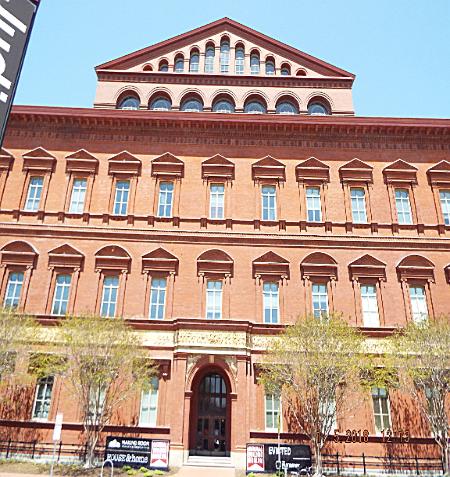
On May 1st, I visited Washington, DC for the day with a group of individuals trying to get NY rent laws changed. We took the Megabus, a double-decker bus, at 34th Street and 11th Avenue. First, we visited the National Building Museum, 401 F Street NW, for the Evicted Exhibit. The exhibit brings Matthew Desmond's book, Evicted: Poverty and Profit in the American City (2016), to life. It was a very moving exhibit. After viewing the exhibit, we had lunch and discussed what we got out of the experience. I found the exhibit to be somewhat depressing but by the end of the day, I was angry. Is this really taking place? In the US of A? Homeless individuals all over D.C.? Many representatives from groups fighting to strengthen housing laws were present and so were representatives from similar groups in DC. After the discussion we headed to the National Portrait Gallery, which is located in the Smithsonian American Art Museum, 8th and F Street NW. Below are some of the photos I took. Due to the difficulty in taking photos in the compact space with many people present some of the photos came out blurry. Some photos were enhanced, others were not used. Most of the explanation given has been rewritten. |
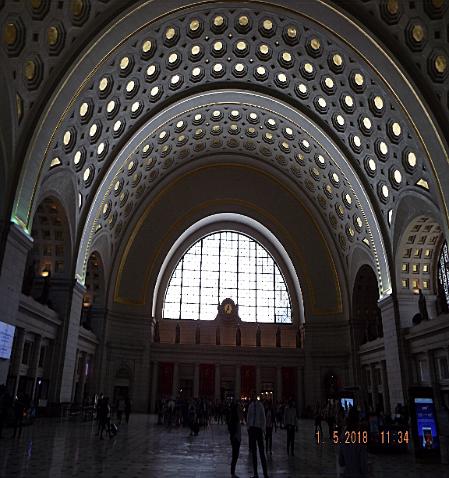


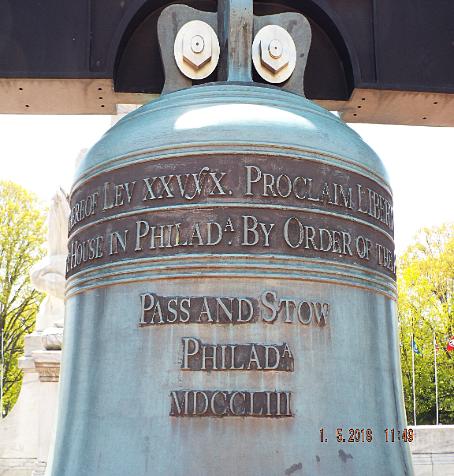

| Inside Union Station, using different settings. |
| Leaving Union Station. Capitol |
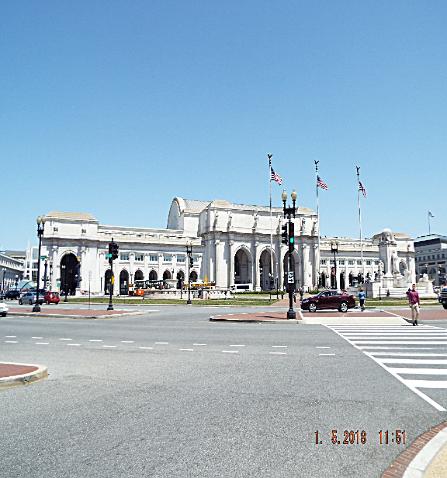
| Outside Union Station |
| Two views of Union Station from a distance. |

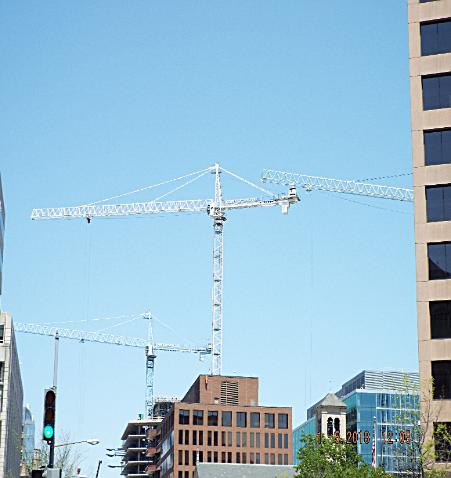
| On our way to National Building Museum. Cranes? Construction taking place all over DC like in NYC. |


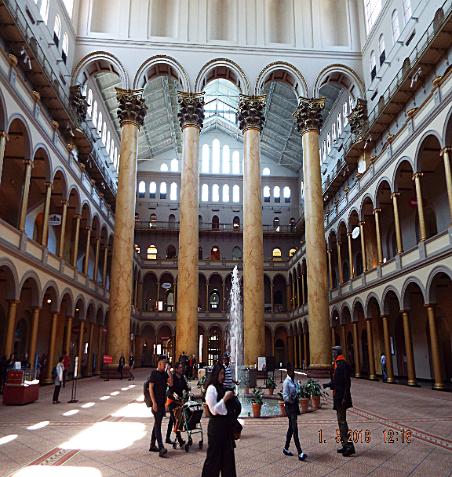


| A different exhibit |




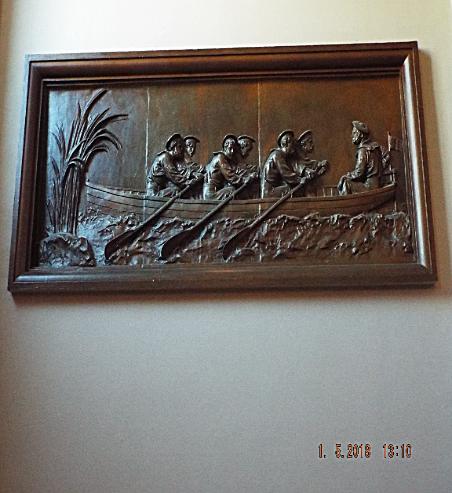
| By Casper Buberl, 1834 to 1899. Services of the Union in the Civil War: Navy, 1883, plaster. |
| Pattern of floor covering. |
| Sun coming in through windows on upper floor. |


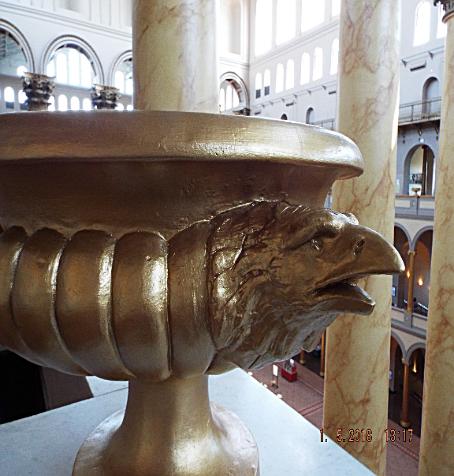
| Photos taken from 2nd and 3rd floors. |
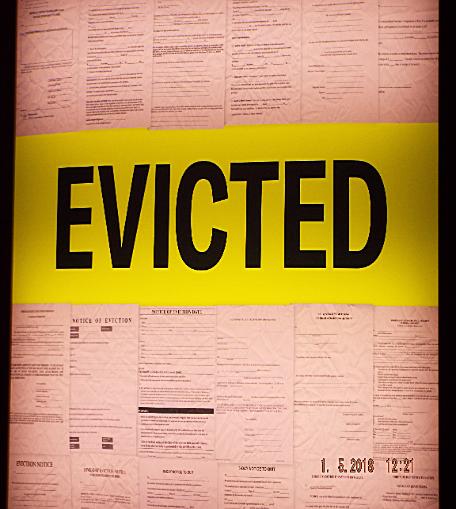
EVICTED There's a knock at the door. Whether or not the belongings are packed, the kids are ready, or the The eviction has begun: it's time to leave. For a family being evicted, the event is a devastating blow - a key link in a long chain of problems. Multiplied many times over, every single day, eviction has become a national crisis. More than two million Americans receive eviction notices every year, each with a unique story of loss. Housing instability leads to problems at work and school, health issues, and community disengagement for children and families. Eviction thereby affects all of us, either directly or indirectly. Eviction used to be rare in the United States, it is now common. This is a relatively new problem over the past few decades, but it does not have to be a continuing trend. We have the tools to make a change. There's a knock on th door. It's time. |

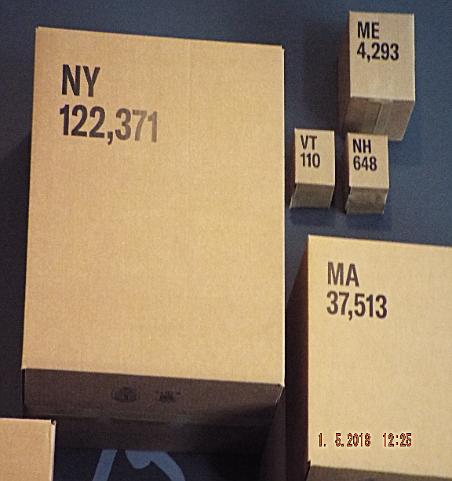
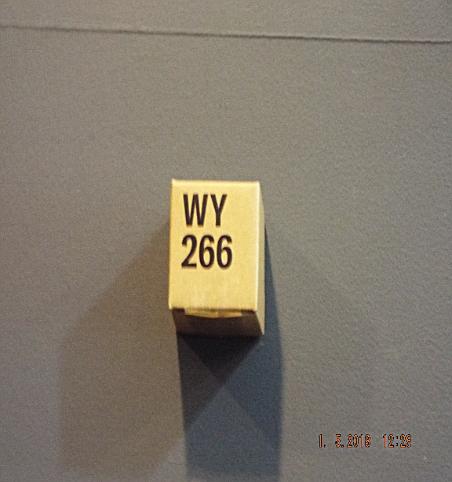
EVICTION NATION There were over 2.4 million eviction filings in 2015. By comparison, this is almost equivalent to the number of foreclosures starts at the height of the housing crisis in 2009. Forced displacement can happen in rural areas, in suburbs, or in the midst of the city. Some jurisdictions have laws that help tenants and landlords; other have more robust affordable housing markets. But eviction happens everywhere. Sociologist Matthew Desmond's Eviction Lab project has accessed date on eviction filings from every state and mapped them to give us a better picture of the crisis for the first time. Collecting date on court-ordered evictions can help elected officials and policy makers decide how to help families stay home. (Update, 08/25/2020 - What will happen in 2020 due to the pandemic (Covid-19)?) |


| The bigger the box, the more evictions. |


Right - WOMEN EVICTED BY RACE. In case you can't make out the numbers on photo: 4 of 60 White Women, 5 of 60 Hispanic Women, 12 of 60 Black Women. |
| The vicious cycle: violence or other crime, reporting crime and police presence, city/police department notifies landlord, eviction or threat of eviction, loss of housing. |
LANDLORDS In 2016, 37% of homes were sold to buyers who did not live or occupy the property. Landlords are playing a new and significant role in the housing market.In many metropolitan areas, such as Washington,D.C., the majority of landlords are not individuals, but rather large companies with portfolios of several thousand units. Landlords in poor neighborhoods can often make more money than they could in more upscale markets. Sometimes they will raise rents in anticipation of incurring losses. They may also save by foregoing upkeep and maintenance. "Slumlord" is a derogatory term used to describe a landlord who does not provide basic repair and services to an apartment, while still demanding regular rent payment. These landlords know their tenants have few options and may not complain about housing quality for fear of risking eviction. |


THE EVICTION During a court-ordered formal eviction, a building or apartment that was once a home transfer out of the family's control. Certain locations - including Washington, D.C., - officially limit cold-weather evictions, or avoid holidays. But in most places, when the eviction is scheduled, it goes forward. The knock on the door brings forth the moving company along with the sheriff or marshall, and becomes an often emotionally violent moment in which the place that was a shelter gets ripped away. Eviction is not just about the loss of private space and possessions. It often leads to a spiral of hard times, causing a domino effect on everything from physical and mental health, to job performance and school stability. Eviction rips apart regular life, disrupting not only home but also almost everything else. Eviction means starting over, over and over again. |
STAYING HOME The knock on the door has come and gone, but the eviction is not - cannot be - where this story ends. Stable housing affects every area of family and community life. Evicted families experience devastating rates of depression, health issue, job loss, and trouble at school. Millions of people are threatened or confronted with eviction every year in our cities, towns, schools, hospital, and workplaces. Any conversation about poverty and social justice must begin with a careful look at housing. We know what can work to alleviate the crisis, and some jurisdictions are already making changes. Among the needed policies are increased access to housing vouchers and free representation for tenants in court. But available affordable rental housing in the private market must increase. Thousands of tenants will be evicted this week. Let's make sure help is on the way. |
Please note: Everything written above which is next to a photo was taken from the various displays. However, since the photos were not too clear, I have retyped the information. It should be noted that tenants in NYC who are being evicted have the Right to Counsel. Tenants who are being evicted and cannot afford a lawyer will get free legal representation. It is a program the City has put into place that will be available in all 5 boros in the next 5 years. Right now it is being rolled in by zip codes. The problem in New York State is that all the housing laws favor the landlords. These laws need to be strengthened to close loopholes or completely abolished. The laws that need to be changed are: Preferential Rent, 20% Vacancy Bonus, Vacancy Decontrol, and Major Capital Improvements. Keep in mind that yearly the Rent Guideline Board (RGB) affords the landlords yet another bonus every time they approve a rent increase. For about 2 years the increase for a one year lease was 0%. The RGB should be done away with. Even with programs that "help" tenants, the landlord does not lose anything. Take the Senior Citizen Rent Increases Exemption (SCRIE) as an example. Though the rent is frozen, the landlord is paid the difference between the actual rent and the frozen rent. The landlord loses nothing. |


| Outside the National Building Museum |


| Shimomura Crossing the Delaware Roger Shimomura (born 1939),Self portrait, Acrylic on canvas, 2010 |
| Third floor of National Portrait Museum |
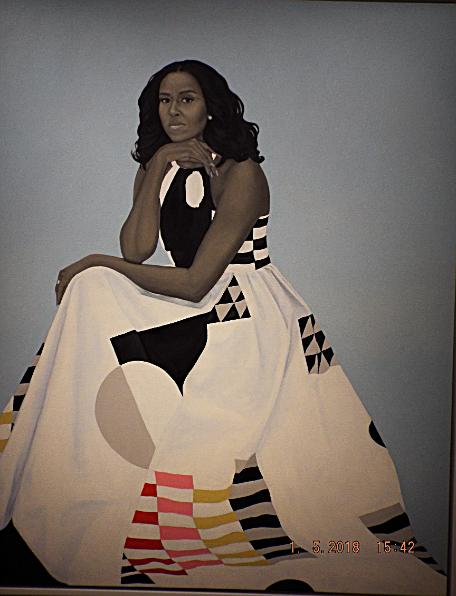
Amy Sherald, a Baltimore-based artist, painted Michelle Obama sitting in a floor-length gown, chin on her hand, looking directly at the viewer with a calm, level gaze. Portrait on 3rd floor. |


Due to the number of people in the area, I had to take these photos from a distance. Portrait on 2nd floor. Kehinde Wiley painted Barack Obama sitting in a chair, elbows in his knees, leaning forward with an intense expression. The background, typical of a Wiley painting, is a riotous pattern of intense green foliage. The photos that follow were taken throughout the 2nd and 3rd floor of the Museum. |

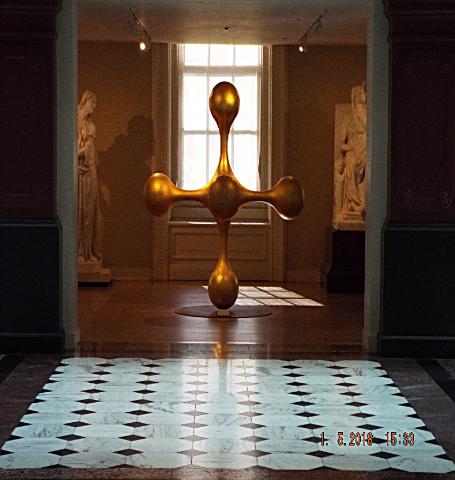


| Paul Feeley, Jack, 1966 |
| Robert Arneson 35 Year Portrait, 1986 |


Luis Muñoz Marín, 1898-1980. Born San Juan, Puerto Rico. A poet and journalist, Muñoz Marín founded the Partido Popular Democrático (PPD) in the last 1930's. He became the island's first elected governor in 1948 & was reelected three times. This portrait by Francisco Rodón, oil on canvas, 1974-1977, captures Muñoz Marín in his later years. |
| William Jefferson Clinton, born 19 Aug 1946 by Chuck Close, born 5 Jul 1940, Oil on canvas, 2006 |
John Fitzgerald Kennedy, 1917-1963 by Elaine de Kooning, oil on canvas, 1963 The photo was taken sort of crooked due to the number of people in the area, it's straight on the wall of the museum. |

Abraham Lincoln, 1809-1865, born Harding County, Kentucky Left: Leonard Wells Volk (1828-1895) made this life mask of Lincoln in 1860, before he began his run for the presidency. Volk had wanted to create a bust but Lincoln did not have time to pose. Plaster, 1917 cast after 1860 original. Middle: Looking at this case of Lincoln's face, which appears gaunt and careworn, one may think that it is a death mask, but in fact, it was taken from life on February 11, 1865 by sculptor Clark Mills (1815-1883), plaster, c. 1917 cast after 1865 original. Right: Soon after Lincoln won the Republican presidential nomination, in May of 1860, sculptor Leonard Wells Volk made casts of Lincoln's hands. The hand closest to face is grasping a sawed-off section of a broom handle. Plaster, c. 1917 after 1860 original |


The Four Justices Sitting: Sandra Day O'Connor, Ruth Bader Ginsburg Standing: Sonia Sotomayor, Elena Kagan In 1981, Sandra Day O'Connor became the first womanto serve on the court. Sonia Sotomayor was the first Hispanic to sit on the Supreme Court Painting by Nelson Shanks (1937-2015) Oil on canvas, 2012 |

| Sun shining on column |
| Courtyard |


| The National Building Museum seen from a block away (E St NW) |
| A block away from the museum. Have no idea what building in center is. |
| Smithsonian American Art Museum National Portrait Gallery |

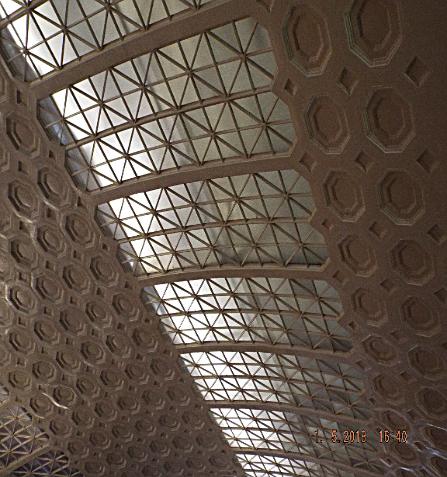

| Union Station as we were heading to bus to return to NYC. Have no idea who woman in photo is. |
| Sunset from the top deck of the Megabus. Photo was taken from inside the bus at a weigh station. Could have been in Delaware. |
| At left, Vermont (VT) shows only 110. If I am not mistaken, it's th least of the evictions in the nation. |
 |  |  |  |  |  |
May 15th - A hot day but in the afternoon it got very windy and dark. We had a downpour with thunder and lightning. In some areas trees fell, destroyed cars/homes and unfortunately a few fatalities. |


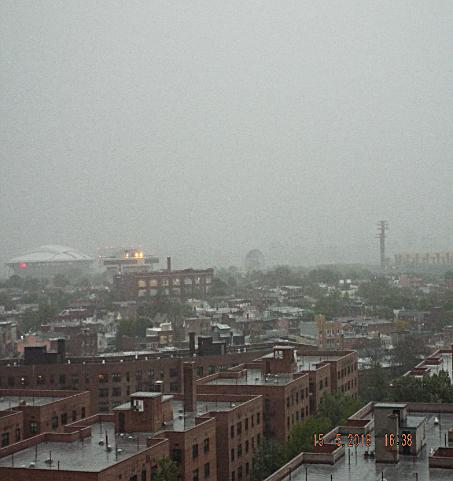

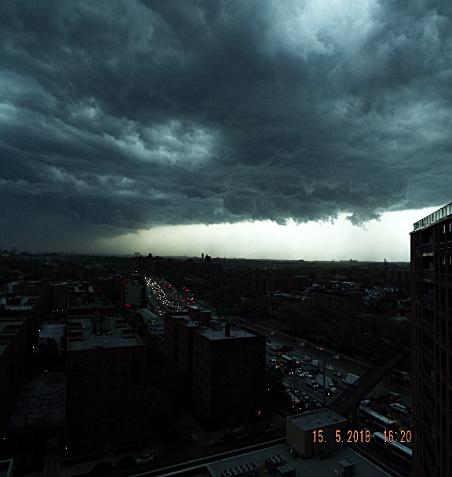


| And the rain came down! |
| Flushing Meadows Corona Park was almost not visible. |
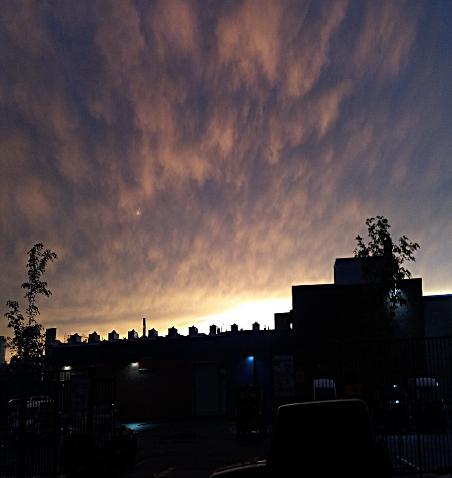


| After the storm. - sunset Taken on Queens Blvd. Used Galaxy J7 |
| Taken from Northern Blvd. Used cell phone. |
The evening of May 26th. Date stamp not shown on photos. |


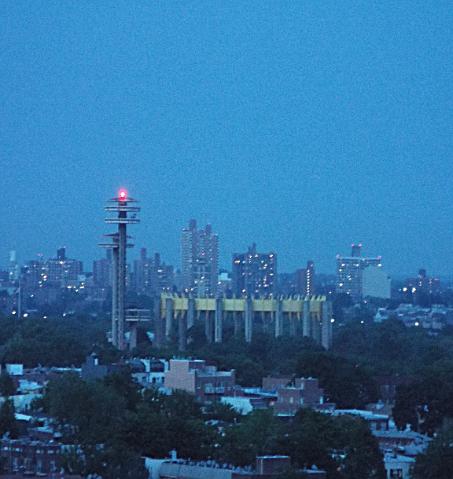
| Sunset setting, all photos except one on right (Auto). |
| Moon behind clouds. |
| Flushing Meadows Corona Park |
May 29th - Manhattanhenge: "...Sometimes referred to as the Manhattan Solstice, happens when the setting sun aligns with the east-to-west streets of the main street grid. The term references Stonehenge, at which the sun aligns with the stones on the solstices in England." Half of the sun is visible from some of the streets in Manhattan and other locations. I dropped by 42nd Street to see the show. Unfortunately, a cloud got in the way. Though the sun itself was not visible, I took the photos posted below. The next time 1/2 of the sun will be visible on 42nd Street will be July 13th. On May 30th and July 12th the full sun will be visible. Due to other commitments, I was unable to return on May 30th for the full sun show. I will have to wait until July. An incredible amount of spectators with cameras were present. |


| 42nd Street, looking west |




| Times Square |

| Chrysler Building, east 42nd Street |
 |  |  |  |
| © Jorge L. Rodríguez – Cru-Riqueño Photos |
| © Jorge L. Rodríguez – Cru-Riqueño Photos |
| © Jorge L. Rodríguez – Cru-Riqueño Photos |
| © Jorge L. Rodríguez – Cru-Riqueño Photos |
| © Jorge L. Rodríguez – Cru-Riqueño Photos |
| © Jorge L. Rodríguez – Cru-Riqueño Photos |
| © Jorge L. Rodríguez – Cru-Riqueño Photos |
| © Jorge L. Rodríguez – Cru-Riqueño Photos |
| © Jorge L. Rodríguez – Cru-Riqueño Photos |